

Hunkering down for Snowmageddon
Plus: The Buckley Centennial

Oh, the weather outside is frightful
But the fire, it’s so delightful
And since we’ve no place to go
Let it snow! Let it snow! Let it snow!

We’re expecting 6-10 inches of snow between now and Sunday morning. We’re not as prepared as I would like to be. The Halloween decorations are officially down for the year, except for one giant skeleton. The art student’s bicycle is in the shed while she’s away at school. I have a bag of salt ready.
However, the snowblower, unused for two years, refused to start. I did what I was supposed to do and put in fresh gasoline straight from the local pump, but it won’t start. It’s probably a carburetor issue or a need for a new sparkplug. This means parts, tools, and mechanical skills that I do not have.
My wife, the Lovely Doreen from Waukesha, called a friend and her husband agreed with my diagnosis. They’re in Florida. Big help.
But I have decent snow shovels. The snow isn’t coming down in a blizzard. Sometime around dinner I’ll have to shovel the first layer, and tomorrow I’ll clean up the rest of it.
In the meantime, the food trucks are making their deliveries to the grocery stores. I haven’t heard of any riots at the local liquor stores because of a shortage of brandy. Kwik Trip is still serving hot food to the masses.
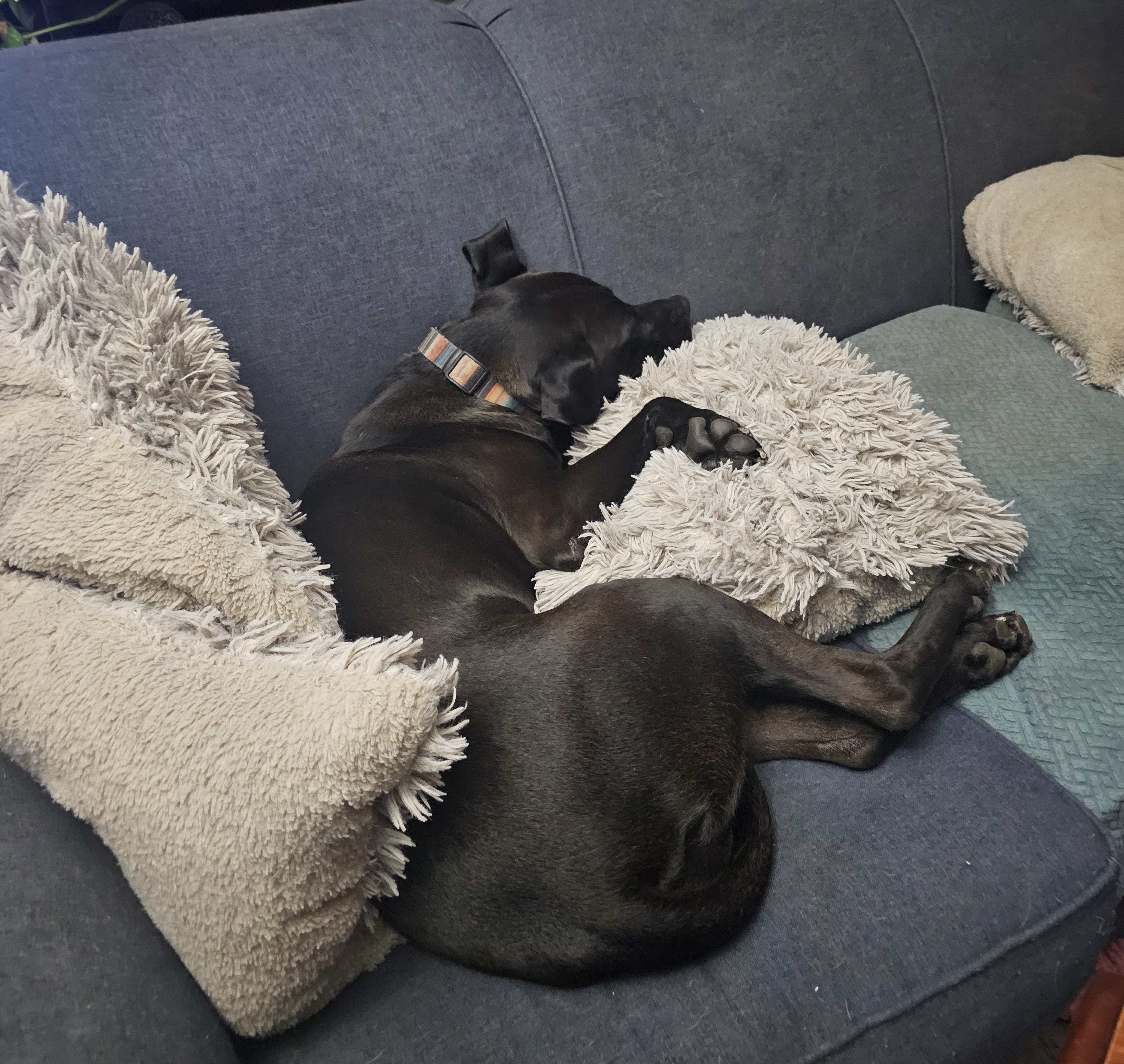
At home, the new furnace is still working. The dogs are still comfortable. We have plenty of leftovers. I even have a bottle of Irish bourbon (yes, there is such a thing) to keep me warm.
Despite the dire predictions of the meteorologists, if we all keep calm and help each other out, we will get through Snowmageddon.
Buckley at 100
This week was the 100th anniversary of William F. Buckley’s birth. Buckley was, of course, the father of modern American conservatism who pulled together the strands of the right, discarding the faulty lines, to weave the tapestry of a movement that led to the rise of President Ronald Reagan and the end of the Cold War. Of the American public intellectuals, Buckley was perhaps the most influential political figure of the late 20th century.
That said, I think David Frum is correct about the world Buckley helped create. The 1955 Buckley would have been thrilled with what had been accomplished by the conservative movement and his magazine, National Review, but the 2005 Buckley was surely disappointed with the world he was leaving. On his recent podcast with Sam Tanenhaus, Frum said:
But I wanna take a stab at your question about greatness. One of the reasons it’s hard is—so Bill Buckley succeeded beyond all—if you had asked Bill Buckley, the young Bill Buckley of 1955, What would success look like in the year 2005?, and he would describe a transformation of the Republican Party into a conservative party; consistent political success of people who identify themselves as conservative; competition to be the most conservative; National Review, of course, surviving half a century. Okay, and the wishing genie would say, Granted. You got it all, everything you imagine in 1955 you wanted. Only, when you get there, it turns out that’s not exactly what he had in mind. And I think that’s one of the things he was wrestling with when he died in 2008, is he’d won, but it wasn’t—he had imagined something that was more intellectual, more rarefied, where people like Rush Limbaugh would have their place, but the leadership would look more like people like Bill Buckley. And that’s not what happened. And so it’s this kind of complicated tangle of getting what you want, only to discover when you get it, it wasn’t quite what you thought you had in mind.
Perhaps, though, Buckley was prescient enough to see what the movement he built would become. Perhaps not.
He had succeeded in steering the Republican Party to the right, starting with the nomination of Sen. Barry Goldwater for president. He inspired countless others (like me) to join the conservative movement and put conservative ideas in front of America after a period when the political right was dismissed as vacuous. A whole generation of actual neo-conservatives, former Democrats disenchanted with the effects of progressive policies, followed, leading to the election of President Ronald Reagan and the end of the Cold War.
But by the time Buckley was fading from public life, signs of the end of the conservative movement could be seen. Republican majorities had no interest in curbing spending. Republicans had run out of ideas for reforming government, and conservatives were looking for a policy program in a post-Cold War world. Where magazines and books had once been the intellectual engine of the right, talk radio and Fox News were shaping the agenda for the Republican Party.
We are now in that period of the post-Buckley right. It echoes the condition of the right that Buckley found when he decided to launch National Review. The right has become a movement of cranks, charlatans, bigots, nativists, isolationists, and statists.
To the extent the political right has lost its mind, as our friend Charlie would say, perhaps we should be grateful that so many are now looking for a new name other than “conservative” to label their movement.
To the extent that there is a unifying name for this movement, it’s Trumpism, the latest flavor of populist authoritarianism. Or you can call it, as some do, “post-liberalism,” which is an extended rationalization for embracing dictatorship, not yet accomplished, fortunately. Call it small “f” fascism.
You could call it “Caesarism,” but the founders of that imperial system were at least great men on horseback, not a spray-tanned, anti-intellectual draft dodger.
Buckley was no stranger to the populist impulse. In confronting the uniform elitist progressivism, mislabeled as liberalism, then dominating society, Buckley famously said in 1961 that he would rather be ruled by the first 2000 names in the telephone book than by the Harvard faculty. But there were limits to indulging populism. In 1968, Buckley confronted Gov. George Wallace in an episode of Firing Line to demonstrate Wallace may have been a populist, but he was no conservative. He was just a racist.
By 2000, after former professional wrestler Jesse Ventura became governor of Minnesota and Donald Trump was rumored to be considering a run for president, Buckley again took a swipe at populism, this time in an interview with Cigar Aficionado magazine:
“So there we have the one problem--the encouragement given to demagogues by undiscriminating voters. The procedure here is to attract support to finance a campaign. But does the term demagogue fit in other circumstances? What about the aspirant who has a private vision to offer to the public and has the means, personal or contrived, to finance a campaign? In some cases, the vision isn’t merely a program to be adopted. It is a program that includes the visionary’s serving as President. Look for the narcissist. The most obvious target in today’s lineup is, of course, Donald Trump. When he looks at a glass, he is mesmerized by its reflection. If Donald Trump were shaped a little differently, he would compete for Miss America.”
The same Buckley who said conservatives should vote for the most rightward, viable candidate, then explained the limits of partisanship.
“In other ages, one paid court to the king. Now we pay court to the people. In the final analysis, just as the king might look down with terminal disdain upon a courtier whose hypocrisy repelled him, so we have no substitute for relying on the voter to exercise a quiet veto when it becomes more necessary to discourage cynical demagogy, than to advance free health for the kids. That can come later, in another venue; the resistance to a corrupting demagogy should take first priority.”
Like Cassandra, Buckley’s warning was ignored, and all the cranks, bigots, anti-Semites and charlatans that had once been policed out of the conservative movement rode in with Trump as barbarians sacking Rome.
Ironically, Buckley’s designated biographer Tanenhaus couldn’t see the clear break between Buckley conservatism and Trumpism when he wrote in The New York Times that Buckley’s criticisms of the political elite paved the way to Trumpism. “Those conditions gave us Mr. Trump and the radical conservatives of our own time, keen to complete the counterrevolution Mr. Buckley envisaged so many years ago — and poised to do it from the pinnacles of political and social power.”
But to see (some) commonalities in method is to miss the desired ends of each. Buckley himself might have drawn on his comparison of the KGB and the CIA to correct Tanenhaus, “…the equivalent of saying that the man who pushes an old lady into the path of a hurtling bus is not to be distinguished from the man who pushes an old lady out of the path of a hurtling bus: on the grounds that, after all, in both cases someone is pushing old ladies around.”
There is nothing left in Trumpism resembling the program that Buckley and his allies advocated. Free markets are now seen as the enemy, as is the press. Attacking our allies while embracing Putin’s Russia is not the policy that Buckley, who celebrated Solzhenitsyn, would have recognized as “conservative.” The Trump Administration’s repeated conflicts with the Catholic Church over immigration would certainly have concerned Buckley. And where Buckley once defended John Lennon’s right to reside in New York when the Nixon Administration wanted him expelled, Trump’s myrmidons are literally grabbing students off the street to deport them.
It would not take a second read of Buckley’s sesquipedalian prose to understand his criticisms of the Trump Administration if Buckley were still alive today and writing columns. But when one points that out to the Trumpist right, the answer comes back, “You don’t know what time it is.” How ironic of a criticism of a movement that began with a promise to stand athwart history yelling “stop.”
Unfortunately, how many of the post-Cold War conservatives quickly joined their new masters on the Trumpist right, seeking their favor rather than defend the gains of the conservative movement? The result has been an end of the “policing” on the right, the purging of those elements which brought discredit to the movement Buckley was building, including the John Birch Society and Ayn Rand.
In 1992, Buckley wrote a book, “In Search of Antisemitism,” which directly criticized two leading figures on the right, Pat Buchanan and Joseph Sobran, essentially severing them from the conservative movement. Recently the president of the Heritage Foundation attempted to shield Tucker Carlson from charges of antisemitism and even wrote an op-ed calling for Pat Buchanan to be awarded the Presidential Medal of Freedom. In his op-ed, Roberts rejected the idea of policing the conservative movement and criticized Buckley.
“In hindsight, we can see that Buckley’s attempt to police the conservative movement, rather than engage in an intellectually honest debate about foreign policy, hindered one of its greatest champions,” Roberts wrote. “We must learn from this mistake.”
But this new coalition isn’t for everyone. Whereas in 2012, conservatives had managed to nominate two of their own, Gov. Mitt Romney and Rep. Paul Ryan, for the Republican national ticket, those two ended up as pariahs within their own party in the blink of a history-gazing eye. The policing of the right now works the other way, and the insane run the asylum.
“And the new system is one of your own invention?”
“Not altogether. Some portions of it are referable to Professor Tarr, of whom you have, necessarily, heard; and, again, there are modifications in my plan which I am happy to acknowledge as belonging of right to the celebrated Fether, with whom, if I mistake not, you have the honor of an intimate acquaintance.”
The System of Doctor Tarr and Professor Fether
By Edgar Allan Poe
Buckley and Me
I never met the man but obviously William F. Buckley had a profound effect on my thinking. But I have to mention the amusing ways he touched my personal life.
My mother, Molly, encouraged her children to read almost anything. I think she would have been shocked at some of the things I read when I read them, such as Stranger in a Strange Land. But when I started checking out copies of National Review from the library, and then Buckley’s books, my mother probably attributed it to school.
But I discovered Buckley and I shared a love for peanut butter. When I started to read to her one of his columns on the subject, that’s where she drew the line. She didn’t object to his politics, but I learned she hated peanut butter. Hated it. And she had no interest in hearing peanut butter be praised by anyone.
Which is funny because, when we were old enough to object, if we didn’t like what she made for dinner she would tell us, “There’s always peanut butter and jelly.” My mother thought it was a punishment, but there’s always a jar of peanut butter in the house for me.
When my son, Will (named after his grandfathers), was learning the alphabet, I would give him my National Review magazines. Will would point to each of the initial caps in the magazine and say the letters aloud. He could also point to pictures of Buckley in the magazine and say his name, “Buckley!” one of the first words he ever learned.
Finaly, I have achieved some immortality, thanks to Buckley. In 1999, I wrote to him asking him to solve a Scrabble dispute. I won’t go into the details, but it concerned someone using the word “jader” and the board in question ending up airborne. Buckley must’ve been amused enough that I received a note back saying the letter would be answered in an upcoming issue of the magazine in his “Notes & Asides” column. I’ve since misplaced the note, but my letter and his answer did end up in the magazine. It also appears on pages 253-254 of “Cancel Your Own Goddam Subscription.”
Finally, a Personal Note, or Where Am I?
It’s been a month since I last updated, and I apologize. I owe my readers, especially the subscribers, an explanation for my absence.
I have an injury to my leg that has finally healed to the point where constant pain has just given way to constant itch. I’m seeing a wound specialist, who says I’m healing, and I’m about to see another specialist about the source of the wound and why it hasn’t healed.
I know. “James, you don’t type with your feet.” No, you don’t. But when it hurts, the pain is enough to cause distraction. Reading and writing become secondary to the need to just get out of the chair and walk off the pain. Or worse, take something for the pain and nod off in mid-sentence. The pain would also disrupt my sleeping, so when I could sleep, I did. That means that when I did feel okay enough to write, I’d fall asleep in the reclining chair with my feet elevated instead.
Anyone else discover that the value of all of these streaming services is that you can intentionally look for a movie or a television program to allow you to sleep?
It’s also not good for my legs to sit at a keyboard for hours at a time when I’m having circulation issues. I’m trying to mitigate that by walking more, and doing more, but just sitting has a deadly toll. Then I get distracted by the pain, and what I was writing becomes mush. The other night I got irritated by the itching (I’m told that means it’s healing) to the point where I couldn’t resist scratching, only to scratch open the wound like an idiot.
I also confess that I’ve let events just drag me down. Physical health and mental health, the effect is more than cumulative. It’s easy to say that I should not allow the Trump era to affect me so, but it does. Then events get away from me and we’re three controversies beyond what I was last writing.
But, as I said in the first paragraph, my leg is healing. And I’m mentally healing as well. In the immortal words of Inspector Dreyfus, “Every day and in every way, I am getting better, and better.” It’s time to get back to doing what I do best and hoping there’s still an audience out there for it. The good news is that I’ve got about a dozen good fragments to build upon, including some comments about the right’s problems with antisemitism.
The Lovely Doreen and I will soon be re-starting our travel blog as well, just in time for our return visit to Rome. It’s the Jubilee year, and we’re going to visit the Holy Doors and see some sights we didn’t see the last time. We may even take in a Wednesday papal audience. (I may have to ask the Pope himself for forgiveness for all of the terrible things the Milwaukee Brewers fan said about the Chicago White Sox.)
James Wigderson is a writer living in Waukesha, Wisconsin. He is the former editor/owner of RightWisconsin and a former columnist for The Waukesha Freeman. Once described as “the spokesman for the state’s far right,” by the Capital Times, Wigderson is now a critic of the new Republican Party under President Donald Trump. He also puts ketchup on hot dogs.
Hey, Jim. We’re not getting any younger. Please find someone else to shovel those twelve inches of snow, and then, sit back and drink your Irish bourbon. We need you healthy!
Here's hoping healing becomes complete and you return to being fully active!